
 Home
Comfort & Fit Solution
Develop Hygiene Products for Better Comfort, Fit & Wearability
Develop diapers, pull-up pants, incontinence pads and underpads around softness, body fit, flexibility, breathability and long-wear comfort. Elintree supports B2B product development from structure optimization and sample development to testing and mass production.

Can We Solve Your Comfort & Fit Problem?
If your current hygiene product has comfort, fit or movement-related issues, we can evaluate the product structure, materials, dimensions and elastic configuration to identify potential improvement directions.
Too Tight Around the Waist
Waistband tension, product dimensions or elastic configuration may not match the target body shape.
Pressure Around the Legs
Leg elastic tension, leg opening dimensions or barrier construction may affect comfort.
Product Moves During Use
Poor fit, insufficient stability or unsuitable product shape can cause the product to shift during movement.
Feels Too Stiff
Topsheet materials, product thickness and structural configuration can influence flexibility and skin-contact comfort.
Too Hot or Stuffy
Backsheet breathability, product bulk and material configuration may affect long-wear comfort.
Comfort Drops During Long Wear
Multiple wettings, increased product weight, moisture and fit changes can affect the wearing experience.
Find the Cause of Your Comfort & Fit Problem
Comfort problems are not always caused by a single material. Product dimensions, structure, elastic tension, body fit and application conditions can all affect the final wearing experience.

Comfort Is More Than Softness
A comfortable hygiene product is not simply a softer product. Comfort and fit are influenced by the interaction between materials, product dimensions, elastic tension, structure and the user's movement.
Softness
Skin-contact materials influence surface feel and overall softness.
Fit
Waist, leg opening and product dimensions need to match the target body shape.
Flexibility
The product should accommodate normal body movement without becoming unstable.
Pressure Control
Elastic tension should support fit without creating excessive localized pressure.
Breathability
Material and backsheet configuration can influence heat and moisture management.
Stability
The product needs to remain properly positioned during movement and long wear.
Build Comfort Into the Product Structure
Comfort is created by the complete product structure rather than one individual component. Each component can be evaluated according to its effect on softness, fit, flexibility, stability and protection.
Skin-Contact Layer
Softness, surface feel and skin-contact comfort.
Acquisition & Distribution Layer
Supports liquid movement while maintaining an appropriate product structure.
Absorbent Core
Core thickness, flexibility and material configuration affect both protection and wearability.
Leg Guards
Provide leakage protection while requiring appropriate leg opening dimensions and elastic tension.
Waistband
Supports fit and product stability around the waist.
Backsheet
Breathability, flexibility and surface characteristics can influence long-wear comfort.
Select Materials Around Your Comfort Requirements
Material selection should follow the target product performance rather than simply choosing the softest available material. Each component needs to work within the complete product structure.

Skin-Contact Materials
Soft nonwoven and topsheet options can be evaluated around surface softness, skin-contact feel and liquid acquisition.
Consider: softness · surface feel · acquisition
Flexible Components
Elastic waistbands and leg elastics can be evaluated according to stretchability, recovery, tension and fit stability.
Consider: elasticity · recovery · tension · fit
Breathable Components
Breathable backsheet options can be considered together with flexibility, product thickness and long-wear requirements.
Consider: breathability · flexibility · thickness
Absorbent Core
Fluff pulp, SAP and core structure can be configured around absorbency, distribution, thickness, flexibility and target cost.
Consider: capacity · distribution · thickness · flexibilityDesign Around the User, Body Shape & Movement
The right comfort and fit configuration depends on who will use the product, how they move and how long the product will be worn.

Bedridden Users
- Soft skin-contact materials
- Breathability
- Long-wear comfort
- Stable positioning

Mobile Users
- Waist stability
- Leg fit
- Flexibility
- Movement and leakage protection

Active Daytime Use
- Flexible structure
- Secure fit
- Lower bulk
- Movement stability

Overnight Use
- Long wear
- Stable fit
- Multiple wettings
- Leakage protection
Balance Comfort, Fit, Protection & Cost
Improving comfort should not compromise the product's core performance. Product development needs to balance several requirements at the same time.
Softer ≠ Always Better
Excessive softness may affect structural stability or production consistency. Material softness should be evaluated within the complete structure.
More Elastic ≠ Better Fit
Higher elastic tension may improve stability but can also increase localized pressure.
Thinner ≠ Always More Comfortable
Reducing thickness may affect absorbency, liquid distribution or leakage protection.
More Absorbency ≠ Better Overall Product
Higher capacity needs to be balanced with thickness, flexibility, fit, leakage protection and target cost.
Comfort + Fit + Absorbency + Leakage Protection + Breathability + Target Cost → Balanced Product Specification
Test the Product Before Mass Production
Comfort-related improvements should be evaluated together with product specifications and functional performance before moving into mass production. Elintree uses agreed product requirements and testing criteria to support sample verification and optimization.
Material Evaluation
- Softness
- Thickness
- Tensile strength
- Flexibility
- Elasticity / recovery
Product Evaluation
- Product dimensions
- Waist dimensions
- Leg opening
- Elastic configuration
- Product thickness
Protection Testing
- Absorption
- Rewet
- Leakage protection
- Liquid distribution
Development Verification
- Compare sample results
- Check agreed specifications
- Optimize product structure
- Customer approval

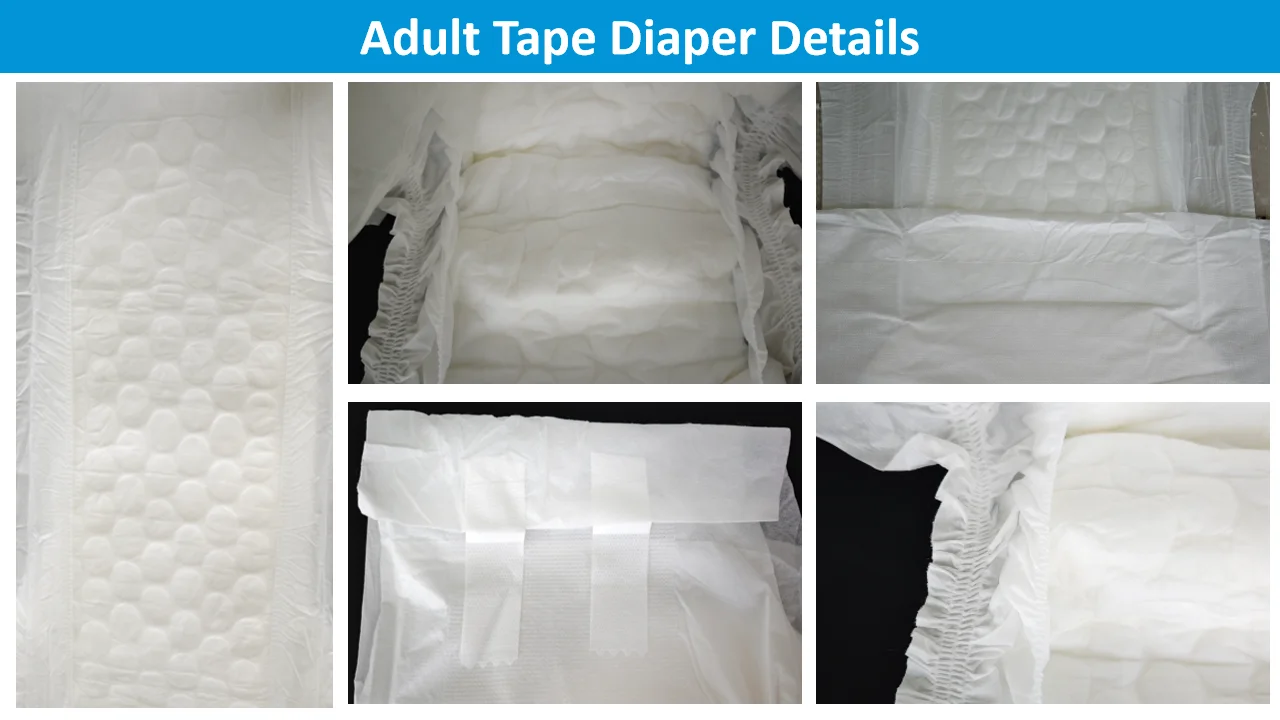
Improve Your Existing Product
You do not always need to develop a completely new product. If you already have a diaper, pull-up or incontinence product but want to improve comfort or fit, an existing sample and specification can be used as the starting point for product evaluation and development.
What You Can Provide
- Existing product sample
- Product specification
- Size information
- Current structure
- Target users
- Customer complaints
- Current comfort or fit problems
- Target performance and cost
Development Process
- Identify comfort and fit issues
- Review structure and materials
- Adjust dimensions and elasticity
- Develop improved samples
- Test and compare
- Customer approval
- Mass production
From Comfort Requirement to Mass Production
Elintree supports product development from requirement definition and structure adjustment to sample verification, customer approval and controlled mass production.
Requirement
Define product type, target users, size, comfort concerns, performance requirements and target cost.
Product Review
Review existing samples, specifications, structure and materials where available.
Structure Development
Adjust product dimensions, elastic configuration, materials and component structure.
Sample Development
Develop samples according to the agreed product direction and performance requirements.
Testing & Optimization
Evaluate functional performance and make necessary product adjustments.
Customer Approval
Confirm final product specifications and requirements before production.
Mass Production
Move the approved specification into controlled production with defined quality requirements.
Production QC
Raw material inspection, in-process inspection, finished-product inspection, batch sampling and production traceability.
Quality Control During Production
Elintree's production quality process can include raw material inspection, IQC, IPQC, FQC/OQC, batch sampling and production traceability according to the approved product specification and applicable quality requirements.
Comfort & Fit Solution FAQ
How can I make my adult diaper more comfortable?
What makes a diaper fit better?
How can I reduce tightness around the waist and legs?
Can you improve comfort without reducing leakage protection?
Can you develop a softer topsheet or more flexible structure?
Can you improve the fit based on our existing sample?
How do you evaluate comfort and fit during product development?
Can you develop comfort-focused private-label diapers?
Have a Comfort or Fit Problem With Your Product?
Tell us about your current product, target users and comfort or fit concerns. Our team can evaluate the product structure and discuss possible development directions for your OEM, ODM or private-label project.
- Product type and target size
- Target users and application
- Current comfort or fit problem
- Existing sample or specification
- Target performance
- Target product cost
- OEM / ODM requirements
- Private-label requirements
Discuss Your Comfort & Fit Requirement
Share your product requirements and current problems with our team. We can discuss the appropriate product development direction.
Start Your Product Discussion