
 Home


Is a Diaper Business Profitable? Profit Margins, Costs and OEM Sourcing
📑 Table of Contents ▼ click to expand/collapse
- Introduction
- 1. What Is the Profit Margin on Diapers?
- 2. What Do Major Hygiene Companies' Financial Reports Tell Us?
- 3. What Is Happening in the Diaper Market?
- 4. What Determines Whether a Diaper Business Is Profitable?
- 5. A Diaper Profit Calculation Example
- 6. How to Calculate the Break-Even Point
- 7. Are Private-Label Diapers a Good Business Opportunity?
- 8. Baby Diapers vs. Adult Incontinence Products: Which Is More Profitable?
- 9. How Can an OEM Diaper Manufacturer Help You Evaluate Costs?
- 10. What Should You Prepare Before Requesting a Diaper Quotation?
- Conclusion: Is a Diaper Business Profitable?
- Explore OEM Diaper Manufacturing Options (CTA)
A diaper business can be profitable, but the result depends on product positioning, manufacturing costs, distribution expenses, pricing strategy, and sales volume. A low factory price does not automatically translate into a high profit margin.
For entrepreneurs, private-label brands, importers, and distributors, the key question is how much revenue remains after the product reaches the customer and all relevant business expenses are paid.
Public financial reports from major hygiene companies provide useful insights into industry economics. However, their company-wide profit margins should not be mistaken for the average profit margin of an individual diaper product or a new diaper business.
This guide examines publicly reported financial data, explains how to calculate diaper profitability, and shows how OEM sourcing can help buyers evaluate a product's commercial feasibility before placing a bulk order.

1. What Is the Profit Margin on Diapers?
There is no single profit margin that applies to every diaper business. A manufacturer, private-label brand, importer, wholesaler, and online retailer operate with different cost structures and revenue models.
Three financial measures are particularly important.
Gross profit margin
Gross profit margin measures the percentage of revenue remaining after the cost of goods sold is deducted.
Formula:
Gross profit margin = (Revenue − Cost of goods sold) ÷ Revenue × 100%
Operating profit margin
Operating profit margin measures the percentage of revenue remaining after operating expenses are deducted, including relevant selling, marketing, and administrative expenses.
Formula:
Operating profit margin = Operating profit ÷ Revenue × 100%
Net profit margin
Net profit margin measures the percentage of revenue remaining as net income after applicable expenses, interest, and taxes.
Formula:
Net profit margin = Net income ÷ Revenue × 100%
For a diaper brand, these figures can differ significantly. A business may have an attractive gross margin but retain much less profit after advertising, warehousing, platform fees, and distribution costs.
For example, if a product costs $10 and sells for $15, the markup on cost is 50%, while the gross margin on sales is 33.3%. Markup and profit margin are not interchangeable.
Is there an industry-average diaper profit margin?
The public financial reports reviewed for this article do not establish a reliable, universal average margin for diaper products. Reported figures often cover multiple product categories and business activities, making direct comparisons misleading.
For a new diaper business, a financial model based on its own target selling price, costs, and expected sales volume is more useful than relying on a single industry-wide percentage.

2. What Do Major Hygiene Companies' Financial Reports Tell Us?
Public company reports offer a real-world reference for understanding how margins differ across large consumer goods businesses. The following figures are reported financial results, not estimates of the profit margin on an individual diaper.
Procter & Gamble: Company-wide net earnings margin
According to P&G's 2026 financial highlights, the company reported:
-
Net sales of $87.0 billion in fiscal 2026.
-
Net earnings attributable to P&G of $16.0 billion.
-
A net earnings margin of 18.5%.
P&G's Baby, Feminine & Family Care segment accounted for 24% of company net sales in fiscal 2026. The segment includes multiple categories, such as baby care, feminine care, adult incontinence products, and family care products.
The 18.5% margin is a company-wide figure. It is not a diaper-only net profit margin and should not be used as a forecast for a startup or private-label brand.
What buyers can learn: Established companies benefit from brand recognition, purchasing scale, distribution networks, and mature operating systems. A new brand may face very different advertising expenses, sales volumes, and negotiating power.
Kimberly-Clark: Gross margin and pricing pressure
According to Kimberly-Clark's 2025 Form 10-K, the company reported:
-
Net sales of $16.4 billion.
-
Gross profit of $5.9 billion.
-
A gross margin of 36.0%.
The company also reported that its gross margin declined by 140 basis points during 2025. Its discussion of the results identified factors including pricing pressure, cost inflation, tariff impacts, and supply-chain investments, partly offset by productivity improvements.
Kimberly-Clark also disclosed its exit from the U.S. private-label diaper business as part of its broader transformation initiative.
These facts do not prove that private-label diapers are unprofitable. A large company may exit a business for strategic, portfolio, or resource-allocation reasons. The results do, however, illustrate how pricing, costs, and business strategy can affect profitability.
What buyers can learn: A lower factory quotation is only one part of the calculation. Import costs, selling expenses, market pricing, and operational efficiency can materially change the final result.
Essity: Gross margin versus operating profitability
Essity's 2025 annual report reported the following company-wide figures, excluding items affecting comparability:
-
Gross profit margin: 44.1%.
-
EBITA margin: 14.1%.
Essity operates across hygiene and health categories, including personal care, incontinence products, and medical solutions. These are group-level figures rather than margins for a single diaper product or the Health & Medical business alone.
The difference between the two measures illustrates how much reported profitability can change after operating expenses and other business costs are considered.
Financial comparison
| Company and reporting scope | Reported financial measure | 2025 or 2026 result |
|---|---|---|
| P&G, company-wide, fiscal 2026 | Net earnings margin | 18.5% |
| Kimberly-Clark, company-wide, 2025 | Gross margin | 36.0% |
| Essity, company-wide, 2025 | Gross margin excluding items affecting comparability | 44.1% |
| Essity, company-wide, 2025 | EBITA margin excluding items affecting comparability | 14.1% |
Sources: linked company financial reports. Fiscal years, accounting definitions, and reporting scopes differ; these figures are not directly comparable and do not represent diaper industry averages.
The key lesson is that a company's gross margin does not tell the whole story. Operating expenses, market positioning, pricing, and business structure influence the profit ultimately retained.

3. What Is Happening in the Diaper Market?
Profitability also depends on how consumers perceive value and how brands position their products.
In a May 2025 analysis, Euromonitor International examined online diaper SKUs in the United States between May 2023 and April 2025.
Its analysis found that:
-
The number of tracked diaper SKUs declined by 14%, from 3,757 to 3,225.
-
The share of tracked SKUs priced above $40 fell from 32% to 26%.
-
Value and mid-priced products gained a greater share of the tracked assortment.
These are online product-assortment findings, not evidence that total U.S. diaper sales declined by 14%. They also do not directly measure brand profit margins.
Nevertheless, the research provides useful commercial context: brands and retailers were adjusting their product assortments and price positioning in response to consumer price sensitivity.
For a new diaper brand, three practical implications follow.
First, a higher selling price does not guarantee higher profitability. A premium product needs a clear reason for consumers to pay more.
Second, competing only on price can be difficult. Lower prices may attract buyers, but they leave less room to absorb distribution expenses, promotions, and unexpected costs.
Third, product differentiation needs to be meaningful. Product performance, fit, comfort, packaging, and clearly substantiated claims can help communicate value. The right choices depend on the target market and customer requirements.
4. What Determines Whether a Diaper Business Is Profitable?
Product positioning and selling price
A business selling value diapers faces different commercial conditions from one offering premium or specialized products.
Before choosing a product, determine the target customer, competing products, expected selling price, and benefits that justify the product's position in the market.
Manufacturing and landed costs
The factory quotation is only one part of the cost of bringing a product to market.
Depending on the transaction, the calculation may include:
-
Manufacturing or purchase price.
-
Packaging and printing.
-
Freight and cargo insurance.
-
Import duties and customs-related charges.
-
Port handling and inland transportation.
-
Warehousing and inventory handling.
Import duties depend on the destination market, product classification, and applicable trade rules. Buyers should verify the actual charges for their intended shipment.
Sales and distribution expenses
The same diaper can produce different financial results in different channels.
An importer selling large volumes to distributors may have lower per-unit fulfillment expenses than an online retailer. However, the importer may also sell at a lower unit price.
Online sellers may face marketplace commissions, advertising costs, pick-and-pack charges, delivery expenses, discounts, and returns.
A useful financial model should reflect the actual channel rather than applying a generic selling-cost percentage.
Inventory turnover and cash flow
A product can appear profitable on paper while tying up too much working capital in slow-moving inventory.
Diaper businesses may need to manage several sizes, absorbency levels, package counts, and product variants. Poor inventory planning can leave cash tied up in products that sell slowly.
Profitability therefore depends not only on the margin per diaper, but also on sales volume, inventory turnover, and the timing of cash inflows and outflows.

5. A Diaper Profit Calculation Example
The following figures are hypothetical and are provided only to demonstrate the calculation. They are not industry averages, Elintree quotations, or actual customer results.
Assume a business purchases a diaper for $0.10 per piece.
| Item | Example amount per diaper |
|---|---|
| Factory purchase price | $0.10 |
| Allocated freight and import costs | $0.03 |
| Landed product cost | $0.13 |
| Selling revenue | $0.30 |
| Revenue remaining after landed product cost | $0.17 |
The $0.17 difference is not net profit. The business may still need to pay for marketing, sales commissions, warehousing, fulfillment, payroll, administration, financing, and taxes.
Consider two hypothetical operating scenarios:
| Item | Scenario A | Scenario B |
|---|---|---|
| Revenue per diaper | $0.30 | $0.30 |
| Landed product cost | $0.13 | $0.13 |
| Allocated selling and fulfillment expenses | $0.10 | $0.14 |
| Remaining before other expenses | $0.07 | $0.03 |
| Remaining as a percentage of revenue | 23.3% | 10.0% |
In Scenario A, $0.07 remains after the listed costs. In Scenario B, higher selling and fulfillment expenses reduce the amount to $0.03.
Neither figure should automatically be called net profit. Additional expenses may remain, and the accounting treatment of individual costs must be consistent.
The example demonstrates why buyers should evaluate the full cost structure rather than focusing only on the factory price.
6. How to Calculate the Break-Even Point
The break-even point is the sales volume at which contribution from sales covers fixed costs.
Consider a separate hypothetical example:
-
Selling revenue: $0.30 per diaper.
-
Variable costs: $0.20 per diaper.
-
Monthly fixed costs: $10,000.
For this calculation, variable costs include all relevant per-unit costs, such as product, landed logistics, and variable selling or fulfillment expenses. Fixed costs are accounted for separately to avoid double counting.
Step 1: Calculate contribution per diaper.
Contribution per diaper = Selling price − Variable cost
$0.30 − $0.20 = $0.10
Step 2: Calculate break-even sales volume.
Break-even volume = Monthly fixed costs ÷ Contribution per diaper
$10,000 ÷ $0.10 = 100,000 diapers per month
Under these assumptions, the business must sell 100,000 diapers per month to cover the specified fixed costs.
This is an illustrative operating model, not a forecast. Actual results will depend on realized selling prices, order volumes, product costs, and expenses. Buyers should also assess the cash required to fund inventory before sales revenue arrives.

7. Are Private-Label Diapers a Good Business Opportunity?
Private-label diapers allow a brand owner or distributor to sell products under its own brand without building and operating a diaper manufacturing facility.
An OEM manufacturing partner can produce products to agreed specifications and packaging requirements. This can reduce the need to invest in production equipment, factory facilities, and a manufacturing workforce.
However, private labeling does not remove the commercial risks of running a diaper business.
Before launching, buyers should evaluate:
-
Target market: Which country, customer group, and sales channel will the product serve?
-
Product positioning: Will it compete on price, comfort, absorbency, overnight use, or another clear benefit?
-
Expected sales volume: Is there sufficient demand to support the planned order quantity?
-
Product and packaging costs: Do the specifications fit the target selling price?
-
Distribution model: Will the product be sold through distributors, retail chains, online marketplaces, or direct sales?
-
Working capital: Can the business fund production, shipping, inventory, and marketing while waiting for sales revenue?
Private labeling may be a suitable route for businesses with a defined market and realistic sales plan. It is not a guarantee of profitability.
8. Baby Diapers vs. Adult Incontinence Products: Which Is More Profitable?
There is no universal answer. Profitability depends on the target market, product positioning, competition, sales channel, and operating model.
Baby diapers serve a broad consumer market with multiple price tiers, sizes, and product formats. Competition can be intense, especially where established brands and value products are widely available.
Adult incontinence products serve different customer groups and purchasing channels, including home care, healthcare distributors, pharmacies, and institutional buyers. Products may vary in absorbency, fit, format, and intended use.
Adult care may offer opportunities for businesses serving specific customer needs, but it should not automatically be considered more profitable than baby care. Market demand, competition, distribution costs, and product requirements differ by region.
For either category, compare realistic selling prices with the complete cost of the product and its distribution.
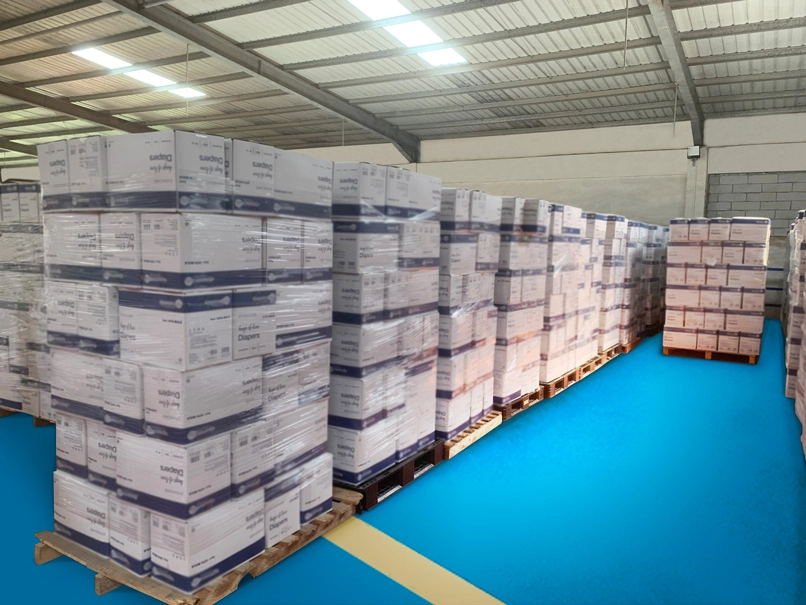
9. How Can an OEM Diaper Manufacturer Help You Evaluate Costs?
An OEM manufacturer can help a buyer assess product specifications, packaging options, and order quantities before production. The objective is to identify a product configuration that meets market requirements while remaining commercially viable.
Product structure and materials
Diaper construction affects both product performance and cost. Relevant considerations may include the absorbent core structure, the balance of fluff pulp and superabsorbent polymer (SAP), topsheet and backsheet materials, leg cuffs, fastening systems, and other design features.
Different configurations can affect absorption performance, fit, comfort, material usage, and production requirements. Changes should be evaluated against the product's intended use rather than made solely to minimize cost.
Packaging, sizes, and order planning
Packaging design, printed materials, pack count, size range, and order volume all influence procurement planning.
A buyer should evaluate which sizes and packaging formats are necessary for launch. Too many variants may increase complexity and tie up cash in inventory, while too few may limit the product's suitability for the target market.
The appropriate minimum order quantity depends on the product, production setup, packaging requirements, and manufacturer. Confirm the applicable MOQ for each product and size before preparing a financial forecast.
Quality and total cost
The lowest quotation does not necessarily produce the lowest total business cost if the product fails to meet market expectations or creates additional returns, complaints, or repeat-order problems.
Buyers should define performance requirements, agree on product specifications, and confirm quality checks and acceptance criteria before placing a bulk order.
An OEM partner can help assess these choices, but it cannot guarantee the brand's sales volume or final profit margin.
10. What Should You Prepare Before Requesting a Diaper Quotation?
A useful quotation begins with a clear commercial brief. Buyers should prepare the following information where possible:
-
Target market: The country or region where the product will be sold.
-
Product category: Baby diapers, baby pull-up pants, adult diapers, or adult pull-up pants.
-
Target customer and price positioning: For example, value, mid-range, or premium.
-
Product requirements: Size range, absorbency expectations, fit, materials, and other essential specifications.
-
Packaging requirements: Brand logo, pack count, packaging design, and language requirements.
-
Estimated order volume: Expected quantities by product and size.
-
Target launch date: The planned schedule for sampling, production, and shipping.
With these details, the buyer and manufacturer can assess whether the requested product and order plan are feasible. The quotation can then be evaluated alongside freight, import costs, distribution expenses, and the intended selling price.
Conclusion: Is a Diaper Business Profitable?
A diaper business can be profitable, but the result depends on how well product positioning, pricing, costs, sales volume, and distribution work together.
Public financial reports from P&G, Kimberly-Clark, and Essity show that even established hygiene businesses manage different margin levels and face pricing and cost pressures. These reports provide useful context, but they do not establish a universal diaper industry profit margin.
For a new brand or importer, the more useful approach is to build a financial model based on a specific target market, expected selling price, complete landed cost, selling expenses, fixed costs, and expected volume.
OEM sourcing can help businesses evaluate manufacturing options without building their own factory. The commercial decision should still be based on verified specifications, a clear quotation, realistic sales assumptions, and a full understanding of the costs involved.
Explore OEM Diaper Manufacturing Options
Elintree supports B2B buyers exploring OEM and ODM solutions for baby diapers, baby pull-up pants, adult diapers, adult pull-up pants, incontinence pads, underpads, and wet wipes.
If you are evaluating a private-label diaper project, prepare your target market, product requirements, packaging preferences, and estimated order volume so the manufacturing options can be assessed against your business objectives.
Looking for other hygiene product solutions? Explore our OEM range.
Ready to discuss your project? Contact our team.
Sources and Further Reading
Financial figures are taken from the cited public reports. Hypothetical calculations are provided for illustration and are not market averages, financial advice, or quotations from Elintree. Company-wide margins should not be interpreted as margins for an individual diaper product.