
 Home


Hot Melt Adhesives in Diaper Manufacturing: Applications and Quality Control
📑 Table of Contents ▼ click to expand/collapse
- Introduction: What Role Do Hot Melt Adhesives Play in a Diaper?
- 1. How Are Hot Melt Adhesives Classified in Diaper Manufacturing?
- 2. What Can Go Wrong? Common Adhesive-Related Quality Issues
- 3. How Does Elintree Manage Hot Melt Adhesive Materials?
- 4. What Should OEM Buyers Ask About Adhesive Quality?
- 5. Technical Reference: Industry Standards for Hot Melt Adhesive Testing
- 6. Frequently Asked Questions
- Conclusion
Introduction: What Role Do Hot Melt Adhesives Play in a Diaper?
Hot melt adhesives are used in diaper manufacturing to bond selected material layers, secure elastic components, and stabilize certain parts of the absorbent core. Their specific applications depend on the diaper design, materials, and manufacturing process.
Adhesive is used in relatively small amounts compared with other diaper materials, but its application and management can affect product assembly and consistency. For diaper brands, importers, and OEM buyers, understanding adhesive applications is useful when evaluating a manufacturer‘s production knowledge and quality management practices.
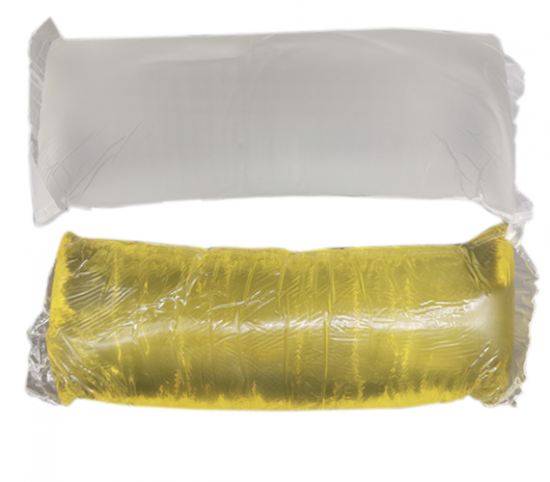
1. How Are Hot Melt Adhesives Classified in Diaper Manufacturing?
In the hygiene industry, hot melt adhesives are typically classified by application function, not by the material layer they touch. This distinction matters because different adhesive applications require different performance properties.
| Adhesive Type | Primary Function | Typical Application Area |
|---|---|---|
| Construction adhesives | Bond selected material layers to maintain product structure | Between topsheet, ADL, backsheet, and nonwoven layers |
| Core adhesives | Stabilize absorbent core materials and help maintain core integrity | Within or around the absorbent core |
| Elastic attachment adhesives | Secure elastic strands or components in designated positions | Waistband and leg cuff areas |
| Fastening component adhesives | Attach selected fastening components where adhesive bonding is used | Side tapes, frontal tape, hook-and-loop components |
| Wetness indicator adhesives | Bond indicator components where this feature is used | Only applicable to products that include a wetness indicator |
Important: Not every diaper design uses every adhesive type. The exact adhesive applications vary by product construction. A wetness indicator adhesive, for example, is only relevant if the product includes a wetness indicator feature.
The objective for manufacturers is to match the adhesive type to the specific bonding requirement without compromising the intended function of the surrounding materials.
2. What Can Go Wrong? Common Adhesive-Related Quality Issues
Adhesive is only one part of a diaper’s overall construction. Bonding problems may contribute to structural defects, but the root cause should be established through investigation—not assumed.
| Possible Issue | Areas to Investigate |
|---|---|
| Material layers separate | Substrate condition, bonding locations, adhesive application, production conditions |
| Elastic components shift | Component positioning, bonding condition, related production process |
| Uneven bonding in selected areas | Material condition, application consistency, equipment or process conditions |
| Local structural instability | Product construction, raw material batches, production records, affected product range |
A critical distinction: Material separation does not automatically prove that the adhesive is defective. The condition of the substrates, product design, and manufacturing process may also be relevant.
For example, if the nonwoven substrate has inconsistent surface energy, the adhesive may not bond properly even if the adhesive itself meets specifications. A structured investigation helps a manufacturer identify the scope of a problem and determine which products or material batches may be affected.

3. How Does Elintree Manage Hot Melt Adhesive Materials?
At Elintree, hot melt adhesives are sourced from external suppliers. The focus of adhesive-related management is on incoming material checks, supplier documentation, batch records, and the handling of nonconforming products—not in-house adhesive formulation or independent performance testing of the adhesive itself.
This distinction is important for buyers evaluating a diaper manufacturer.
Incoming Material Inspection
When hot melt adhesive materials arrive, the incoming checks cover four basic items:
| Check Item | What Is Verified |
|---|---|
| Specifications | Material specifications against purchasing requirements |
| Packaging | Condition of packaging and container integrity |
| Batch information | Available batch identification and labeling |
| Technical documents | Accompanying technical documentation or certificates, where applicable |
These checks help confirm that the incoming material and its documentation can be identified and reviewed before use. They are not equivalent to independent laboratory testing of adhesive properties. Elintree does not currently perform its own performance testing of the hot melt adhesive itself.
Supplier Documentation and Batch Records
Elintree retains relevant supplier technical information, test certificates, and batch records. These records can support the identification of the material involved when a quality concern arises.
For OEM buyers, it is worth asking whether a manufacturer can explain how incoming materials are identified, what documentation is retained, and how relevant batch information is used during an investigation.
Nonconforming Product Isolation and Traceability
When a product quality issue is identified, the response must address both the affected products and the possibility that other products from the same batch may be involved.
Elintree‘s handling process includes:
Step 1: Isolate affected products
Products identified as abnormal are separated from conforming products.
Step 2: Trace relevant raw material batches
The corresponding raw material batches are investigated to help establish the scope of the issue.
Step 3: Inspect potentially affected products
Products from the same batch are isolated and subjected to quality inspection.
Step 4: Dispose of nonconforming products
Products confirmed as nonconforming are destroyed rather than released for delivery.
The purpose of this process is to prevent identified nonconforming products from entering subsequent delivery and to support a systematic investigation of the issue.

4. What Should OEM Buyers Ask About Adhesive Quality?
When selecting a diaper OEM or private label manufacturer, buyers do not necessarily need to manage adhesive technical details themselves. However, they should understand how the manufacturer handles the materials used in the finished product.
Five Questions to Ask
1. Which adhesive types are used in our diaper design?
The answer should relate to the actual product construction—construction adhesives, core adhesives, elastic attachment, fastening components, and wetness indicator (if applicable).
2. How are incoming adhesive materials checked?
Ask whether the manufacturer checks specifications, packaging, batch identification, and accompanying technical documentation. Also clarify whether the manufacturer conducts independent adhesive performance testing or relies on supplier documentation.
3. Are supplier technical documents and batch records retained?
Documentation and batch identification help establish which material was received and support an investigation if a quality concern occurs.
4. What happens when a quality issue is identified?
Ask how affected products are isolated, how relevant raw material batches are investigated, and how potentially affected products are inspected before a disposition decision is made.
5. How does the manufacturer prevent nonconforming products from being delivered?
The manufacturer should be able to explain its approach to product isolation, inspection, and disposition, including how confirmed nonconforming products are handled.
These questions help buyers evaluate the manufacturer’s material-management and quality-control processes without assuming that every factory has the same testing equipment or inspection capabilities.
5. Technical Reference: Industry Standards for Hot Melt Adhesive Testing
The following standards are commonly referenced in the hygiene industry for adhesive performance evaluation. Elintree does not currently perform these tests in-house, but buyers may request supplier documentation referencing these methods.
| Standard | What It Covers |
|---|---|
| ASTM D3330 | Peel adhesion of pressure-sensitive tape |
| ASTM D3654 | Shear adhesion of pressure-sensitive tape |
| ASTM D2979 | Probe tack of pressure-sensitive adhesives |
| ISO 29862 | Peel adhesion of self-adhesive tapes |
Note: These standards are provided for reference. Actual test methods and requirements should be confirmed with the adhesive supplier for the specific application.
Industry reference: Bostik, a global adhesive supplier for hygiene products, publishes technical information on adhesive applications including construction bonding, core stabilization, elastic attachment, and wetness indicators. Their public materials provide additional context on adhesive selection and testing for disposable hygiene products.

6. Frequently Asked Questions
What is hot melt adhesive used for in diapers?
Hot melt adhesives are used for construction bonding, core stabilization, elastic attachment, fastening component attachment, and—in products that include the feature—wetness indicator bonding. The specific applications depend on the diaper design.
Does hot melt adhesive absorb liquid?
No. Liquid absorption and retention are primarily functions of the absorbent core materials, including fluff pulp and superabsorbent polymer (SAP). Adhesive may help stabilize selected parts of the core structure, but it is not a substitute for absorbent materials.
Can adhesive problems cause diaper leakage?
Adhesive-related defects may contribute to structural problems that affect product performance in some cases. However, leakage can have several causes, including fit, barrier construction, absorbent-core design, and manufacturing defects. Investigation is needed before identifying the cause.
How is hot melt adhesive quality checked at Elintree?
Elintree checks incoming specifications, packaging, batch information, and relevant supplier technical documentation or certificates. It retains supplier documentation and batch records. Elintree does not currently perform independent performance testing of the hot melt adhesive itself.
Why is batch traceability important in diaper manufacturing?
Batch traceability helps a manufacturer identify relevant raw material batches and investigate the potential scope of a quality issue. Combined with product isolation and inspection, it supports the control of potentially affected products.
What should buyers request when evaluating a diaper manufacturer?
Buyers can request relevant product specifications, applicable supplier documentation, information about incoming material checks, and an explanation of how the manufacturer isolates and investigates nonconforming products. Any testing or certification claims should be supported by applicable records.
Conclusion
Hot melt adhesives support selected bonding applications in disposable diaper manufacturing, including construction bonding, elastic attachment, core stabilization, and component attachment. Their role should be understood alongside the materials, product design, and production processes that determine the performance of the finished diaper.
For brands, importers, and OEM buyers, evaluating a manufacturer’s material management is an important part of supplier selection. Incoming material checks, supplier documentation, batch traceability, and the isolation and inspection of potentially affected products provide practical information about how a manufacturer manages quality concerns.
Elintree supports B2B diaper sourcing and OEM/ODM customization. Buyers evaluating a private label diaper project can discuss their product structure, material requirements, specifications, and quality expectations with the team before confirming a production program.
About This Article
Written by: Elintree Technical Team
Reviewed by: Elintree Quality Control Department
Basis: This article is based on Elintree‘s actual incoming material inspection, batch traceability, and nonconforming product handling procedures. It does not claim that Elintree performs independent adhesive performance testing or holds certifications beyond those listed on our official website.
Technical references:
-
Bostik (global adhesive supplier) — public technical information on hygiene adhesive applications
-
ASTM D3330, D3654, D2979 — standard test methods for pressure-sensitive adhesives
-
ISO 29862 — peel adhesion of self-adhesive tapes
For specific product inquiries, contact our team at sales@elintree.com.
Looking for a Diaper OEM Partner?
Explore Elintree’s Baby & Adult Care Product Range
Discuss your OEM, private label, or wholesale project with our team.